

Each autumn, fireworks rise above towns and cities across the United Kingdom while bonfires illuminate the night. At the centre of this tradition is the familiar figure of Guy Fawkes, often shown with a moustache, pointed beard and dark hat. Yet the celebrations began with a dangerous political conspiracy, not with a cheerful public festival. The Gunpowder Plot was an attempt to destroy the English government at its symbolic heart, and its legacy has changed repeatedly over more than four centuries.
The Gunpowder Plot and the religious tensions of Jacobean England
To understand the conspiracy, it is necessary to look beyond the image of Guy Fawkes guarding barrels of gunpowder. England in the early seventeenth century was deeply divided by religion. The Reformation had separated the country from Rome, and the English Crown required public loyalty to the Protestant settlement. Catholics faced fines, legal restrictions and pressure to attend Anglican services, while many Catholic families continued to worship privately.
When James I succeeded Elizabeth I in 1603, some Catholics hoped that the new king might adopt a more tolerant policy. Those hopes faded as restrictions remained. A small group of Catholic gentlemen came to believe that peaceful appeals had failed. Their proposed answer was extreme: kill the king, destroy Parliament and place a Catholic monarch on the throne.
Robert Catesby’s conspiracy
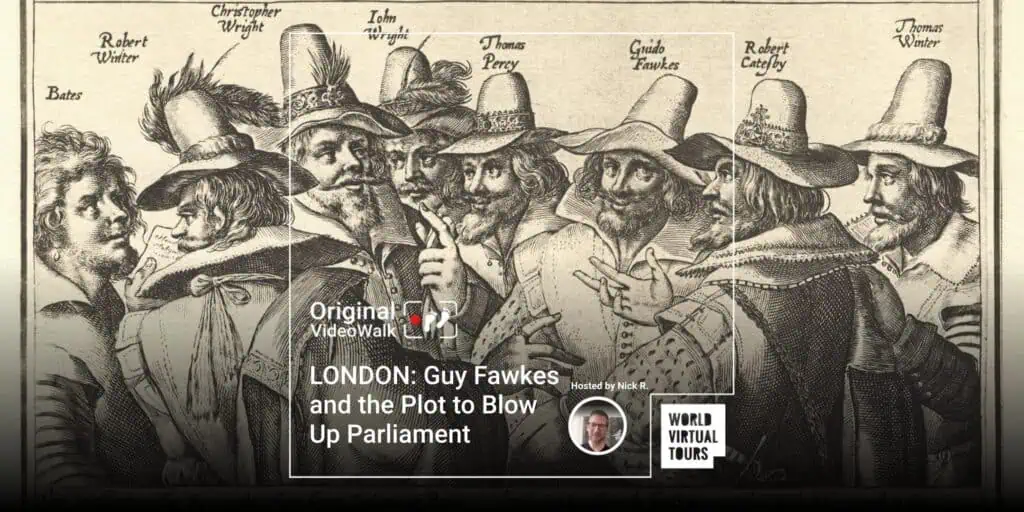
The plot was organised by Robert Catesby, a determined Catholic landowner who recruited a circle of fellow conspirators. Among them were Thomas Wintour, Thomas Percy, John Wright and, later, Guy Fawkes. The conspirators did not all share identical backgrounds, but they were connected by religious commitment, personal loyalty and opposition to the government.
Guy Fawkes brought a particular skill to the group. He had served as a soldier in continental Europe, fighting for Catholic Spain in the Netherlands, and had experience with military explosives. The conspirators therefore entrusted him with the practical task of preparing the gunpowder and waiting beneath the parliamentary complex until the state opening.
The plan depended on access. Thomas Percy rented a property close to the Palace of Westminster, and the conspirators eventually secured an undercroft beneath the House of Lords. Their intention was to detonate a large quantity of gunpowder when the king, royal family, bishops and members of both Houses gathered for the parliamentary ceremony. The target was not simply a building. It represented the monarchy, the legislature and the political order the conspirators wanted to overthrow.
How the plot was discovered
The conspiracy began to unravel through a warning rather than through an elaborate intelligence operation. A letter was sent to Lord Monteagle, a Catholic-connected member of the nobility, advising him to avoid the opening of Parliament. The letter reached the authorities, who treated it as a possible threat and began searching the Westminster area.
On the night before the planned attack, officials found Guy Fawkes in the undercroft with the gunpowder. He initially gave the name John Johnson and attempted to conceal the purpose of the materials. After his arrest, James I reportedly recognised that the discovery indicated a wider conspiracy. Searches and arrests followed, and the remaining plotters fled London.
The conspirators made a final stand at Holbeche House in Staffordshire, where several were killed or captured. Guy Fawkes was taken to the Tower of London and interrogated. His signature on a later confession, visibly weakened after torture, became one of the enduring documents associated with the case. The surviving conspirators were tried and executed in 1606.
From failed rebellion to public ritual
The government quickly turned the failed attack into a public lesson in loyalty. Parliament established an annual day of thanksgiving, and communities were encouraged to mark the survival of the king with bonfires. Over time, the religious and political meaning of the commemoration shifted. What began as official anti-Catholic observance became a popular autumn gathering involving fireworks, food and homemade effigies.
The name Bonfire Night remains widely used, while “Guy Fawkes Night” refers to the figure traditionally burned on the bonfire. Effigies have not always represented Fawkes alone; political figures and public personalities have frequently replaced him. This flexibility reveals how the festival has functioned as a form of popular commentary as well as historical remembrance.
Why Guy Fawkes became the face of the plot
Guy Fawkes was only one member of the conspiracy, and not its political leader. His prominence comes from the dramatic circumstances of his arrest: he was discovered beneath Parliament beside the explosives. That scene provided a memorable image for official propaganda, popular storytelling and later theatre, illustration and film.
In the modern era, the stylised Guy Fawkes mask became associated with protest movements and ideas of anonymity. Its widespread use shows how historical symbols can escape their original context. A man once presented as a traitor to the Crown has become, in different settings, an image of resistance to authority. The same face can therefore carry conflicting meanings: treason, rebellion, political dissent or simple festival tradition.
Exploring the Gunpowder Plot in London
The story remains especially powerful in London because its locations connect political history with the physical landscape of Westminster. The Palace of Westminster, the surrounding streets and the surviving traditions of parliamentary ceremony all help explain why the conspirators chose this place and why their attempt resonated so strongly with contemporaries.
For readers who would like to investigate the subject further, World Virtual Tours presents LONDON: Guy Fawkes and the Plot to Blow Up Parliament. This VideoWalk, hosted by actor and parliamentary tour guide Nick Richmond, revisits the Gunpowder Plot and the London locations connected with the conspirators. It offers a further opportunity to place the famous November tradition within the religious, political and architectural history of Westminster.
Meet your World Virtual Tours guide: Nick.

Explore the upcoming tour: LONDON: Guy Fawkes and the Plot to Blow Up Parliament


