Few cities embody transformation as dramatically as Tokyo. Today, its skyline of glass towers, illuminated streets, vast railway stations, and futuristic architecture seems to represent modernity itself. Yet less than two centuries ago, this extraordinary metropolis was Edo, the political heart of a feudal society dominated by the samurai and ruled by the Tokugawa shoguns.
The journey from Edo to modern Tokyo was not simply a change of name. It was one of the fastest and most profound transformations in urban and social history: the end of the samurai age, the birth of a new imperial capital, and Japan’s extraordinary encounter with Western technology, architecture, and ideas.
Edo: The City of the Shoguns ⚔️
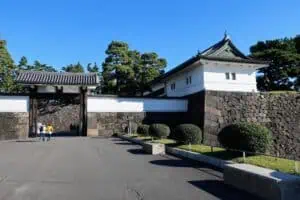
For more than 250 years, Japan lived under the Tokugawa Shogunate, established in 1603. Although the emperor remained in Kyoto, real political power was concentrated in Edo, where the shogun ruled from the enormous Edo Castle.
Around this center of power developed a sophisticated city of samurai residences, merchants, craftsmen, temples, theaters, markets, and canals.
By the 18th century, Edo had become one of the largest cities in the world. Its culture flourished through kabuki theater, literature, festivals and the celebrated ukiyo-e woodblock prints that captured everything from famous actors to everyday urban life.
Tokyo’s modern streets may look radically different, but the geography of Edo has never completely disappeared. Roads, neighborhoods, waterways and even the grounds of today’s Imperial Palace preserve traces of the samurai capital beneath the modern city.
The End of the Samurai Era ⚔️➡️🏙️
During the 19th century, Japan faced growing pressure from Western powers to open its ports and establish international trade.
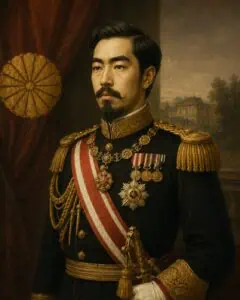
The political crisis that followed ultimately brought an end to Tokugawa rule. In 1868, the Meiji Restoration restored imperial authority under the young Emperor Meiji and launched a period of extraordinary change.
Edo became Tokyo, meaning “Eastern Capital,” and the emperor moved there from Kyoto.
But the transformation went much deeper than a new name.
The feudal domains were abolished, a centralized government emerged, and the traditional privileges of the samurai class gradually disappeared. Japan began creating modern institutions, industries, transportation networks and armed forces while actively studying European and American systems.
In only a few decades, the society that had produced the samurai was being transformed into a modern nation-state.
When East Met West 🏛️
One of the most visible signs of the new Japan appeared in its architecture.
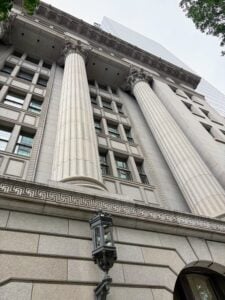
The Meiji government deliberately embraced Western architectural styles as symbols of progress and international status. Brick buildings, stone façades, banks, government offices and modern commercial districts began appearing alongside traditional wooden structures.
This meeting between Japanese tradition and Western influence became one of the defining characteristics of modern Tokyo.
The transformation was particularly visible around the Imperial Palace and Marunouchi, which developed into an important business district. Architecture was no longer merely functional: it became a declaration that Japan had entered a new era.
Tokyo Station and the Architecture of a New Japan 🚂
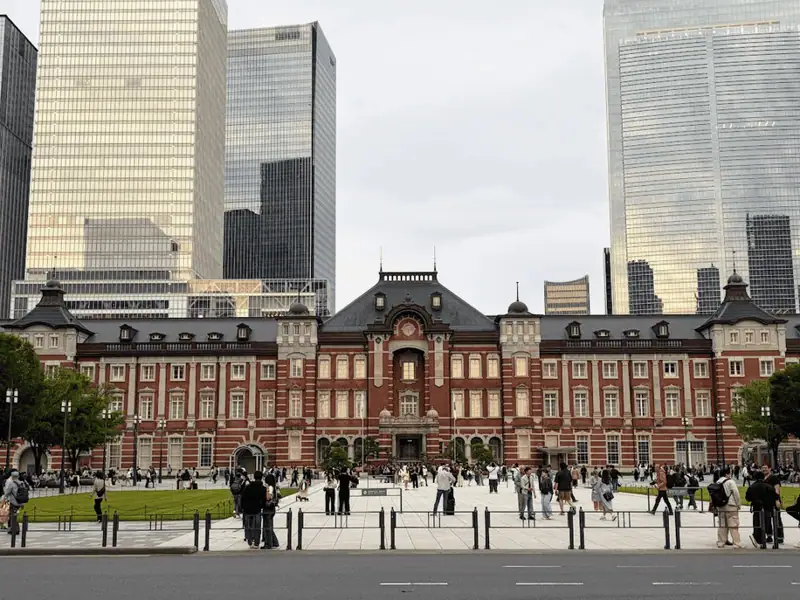
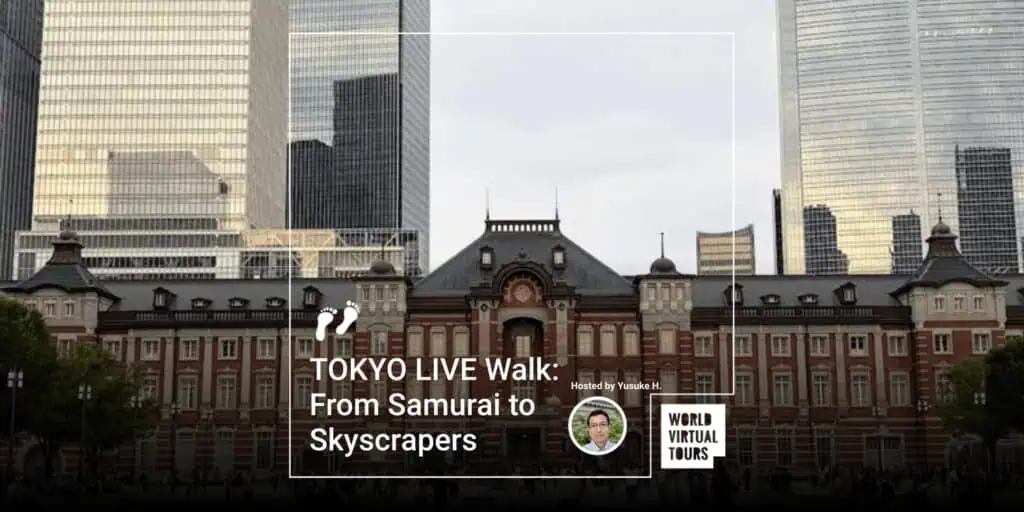
Few buildings symbolize this transformation better than Tokyo Station.
Opened in 1914, its monumental red-brick façade represented a city now connected by railways, commerce and industry. The station became a gateway to the new capital and a powerful symbol of Japan’s modernization.
The railway itself changed how people experienced the country. Distances that had once required long journeys could now be crossed rapidly, connecting Tokyo with an expanding national network.
Around the station, Marunouchi evolved into the business heart of the capital. Offices and commercial buildings increasingly replaced the former estates of feudal lords.
The physical landscape of the samurai city was literally becoming the landscape of modern Japan.
A City That Had to Reinvent Itself Again 🌆
Tokyo’s transformation did not end with the Meiji period.
The Great Kantō Earthquake of 1923 devastated much of the city. Two decades later, World War II brought destruction on an even greater scale.
Each time, Tokyo rebuilt.
After 1945, rapid economic growth reshaped the capital once again. Expressways, railway lines, skyscrapers and vast commercial districts emerged, while the 1964 Tokyo Olympics presented a new image of Japan to the world.
And yet the past survived.
Behind office towers and busy avenues, visitors can still encounter shrines, gardens, fragments of old walls and street patterns inherited from Edo. Tokyo did not simply erase its previous identities; it built new ones around them.
Samurai and Skyscrapers: Two Tokyos in One 🌸
This coexistence may be the most compelling thing about Tokyo.
The Imperial Palace still occupies the site of the former Edo Castle. Modern Marunouchi grew from land once occupied by feudal residences. Tokyo Station stands as a monument to the modernization that followed the end of the samurai era.
The city therefore becomes a kind of historical map.
Look carefully at contemporary Tokyo and the story of Edo, the samurai, the Meiji Restoration and modern Japan is still visible beneath the skyscrapers.
Tokyo’s transformation was not simply a journey from old to new. It was a continuous negotiation between tradition and innovation — a process that continues to define the city today.
Experience the Transformation LIVE from Tokyo 🚶♂️🇯🇵
And there is perhaps no better way to understand this extraordinary transformation than to walk through the places where it happened.
In our upcoming TOKYO LIVE Walk: From Samurai to Skyscrapers, government-licensed Japanese guide Yusuke will take us live through the heart of Tokyo, exploring how a city ruled by samurai became one of the world’s great modern capitals.
From the surroundings of the Imperial Palace to Marunouchi and Tokyo Station, we will discover Western-style architecture, the people who helped build modern Japan, and the traces of the extraordinary encounter between East and West.
👉 Discover TOKYO LIVE Walk: From Samurai to Skyscrapers and experience this remarkable story live from the streets of Tokyo
with Yusuke Hirayama.
#Tokyo #TokyoHistory #Edo #Samurai #MeijiRestoration #ModernJapan #JapaneseHistory #TokyoArchitecture #Marunouchi #TokyoStation #ImperialPalace #SamuraiHistory #JapanHistory #EdoPeriod #MeijiEra #JapaneseCulture #TokyoLiveWalk #VirtualTour #WorldVirtualTours #DiscoverTokyo